
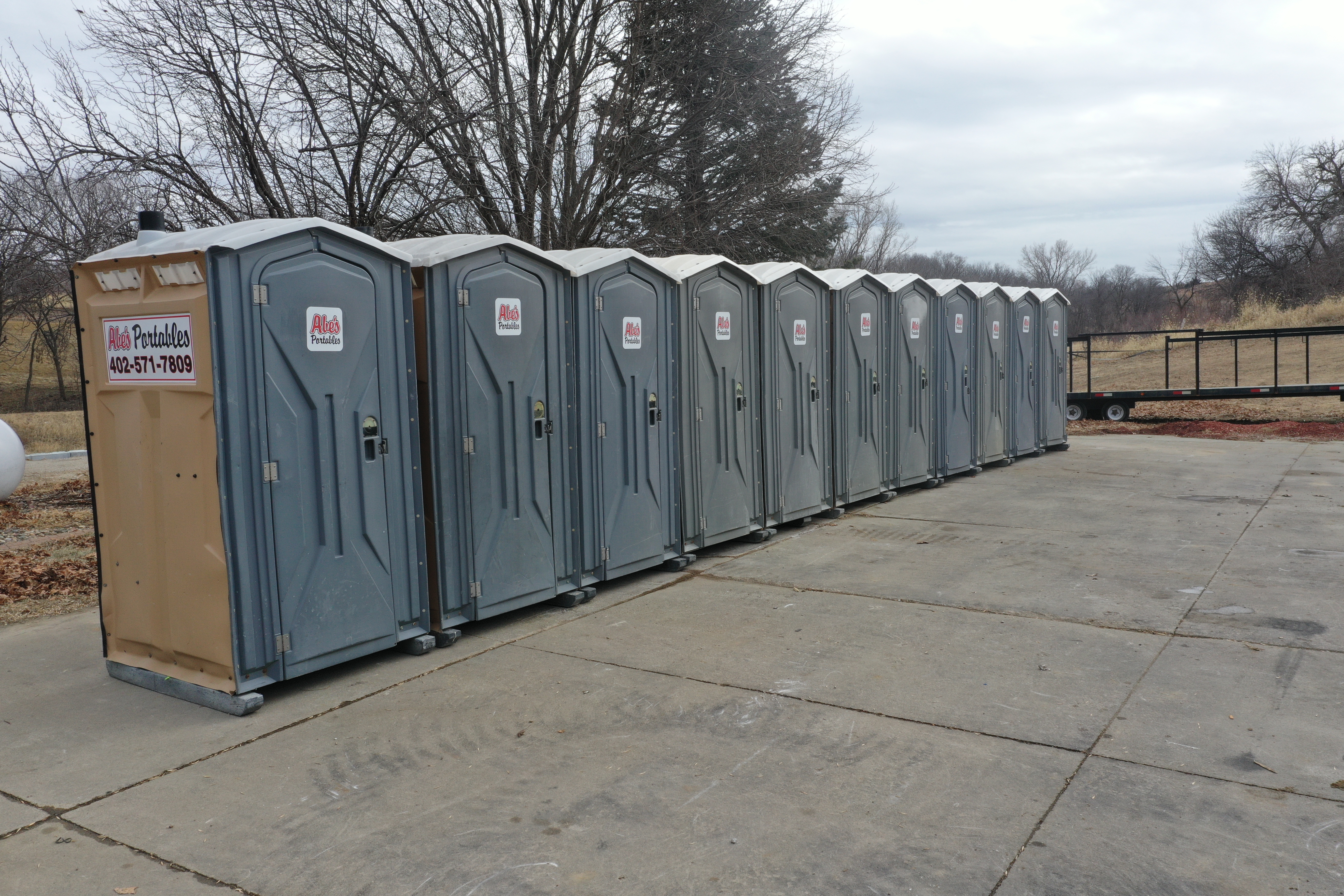
OSHA 29 CFR 1926.51
Construction site sanitation
OSHA Requires It.
We Keep You Compliant.
OSHA standard 29 CFR 1926.51 requires employers to provide toilet facilities for every worker on a construction site. For sites with 20 or fewer employees, one toilet is the minimum. Larger crews require additional units on a sliding scale. Failure to meet the standard exposes the contractor to citations, fines, and project delays during inspections.
The same standard addresses handwashing access for workers exposed to specific materials, including concrete, solvents, and hazardous coatings. Many general contractors add handwash stations to every job order as a baseline practice, regardless of whether chemical exposure is formally documented. It simplifies compliance and keeps the workforce healthier through a long build.
OSHA 1926.51 at a glance
1 toilet required for 1 to 20 workers on site
1 toilet per 20 additional workers above the initial 20
Facilities must be maintained in a sanitary condition
Accessible to workers without leaving the immediate work area when possible
Handwashing facilities required where workers handle hazardous materials
What the service covers
Every Component, from First Drop to Final Pull
Unit delivery and placement
The driver positions each unit where your site super or foreman specifies. Units are leveled, confirmed clean and stocked, and oriented for worker access without blocking equipment paths. On large sites, we work from a placement map you provide or help you create one based on crew location and OSHA access requirements.
Placement confirmed with site contact before driver leaves
Weekly pump-outs
The pump truck arrives on a fixed weekly schedule. The tech pumps the waste tank, replaces hand sanitizer, restocks tissue, and wipes the interior. Service reports are available if your GC or owner requires documentation. The schedule is set at booking and adjusted only when you request a change.
Supply restocking
Tissue, hand sanitizer, and deodorizer are restocked on every service visit without a separate request. If supplies run low between scheduled visits, a resupply call is available. Long-term construction rentals can also be set up with an extended stocking interval for sites with lower daily traffic.
Unit relocations
Construction sites evolve. When the work area shifts, the units should move with it. Relocation requests are handled on scheduled service days whenever possible, or as a standalone move for time-sensitive site changes. Call the office at least 24 hours before the needed move date to confirm scheduling.
Final pickup
When the project closes, notify us and the pickup crew retrieves all units in the next available service window. Standard pickups carry no removal fee. Units should be accessible by truck and free of obstructions. Long-term rentals are closed with a single call and no rolling penalty for ending early.

Serving active job sites across Omaha, Bellevue, Papillion, Lincoln, and Council Bluffs.
By the numbers
OSHA Ratios, Service Frequency, and Delivery Windows
20
Workers per unit (OSHA minimum)
OSHA 29 CFR 1926.51 sets 1 toilet per 20 workers as the baseline ratio for construction sites where workers cannot leave the site to use facilities. Many GCs order at a 1-to-15 ratio to reduce worker time off-task and stay ahead of crew count increases during active builds.
1x
Per week, standard pump schedule
The standard construction site service cadence is one pump and resupply visit per unit per week. Sites with higher worker density, summer heat, or extended daily hours can request twice-weekly service at booking. Weekly service is included in the base rental rate. Extra visits are priced per trip.
Same
Day delivery for Omaha metro sites
For job sites within the Omaha metro service area, same-day delivery is available when the request comes in before 10 a.m. This covers Douglas and Sarpy counties as a standard. Sites in Lincoln, Council Bluffs, and outlying areas are scheduled on next-available routes depending on truck availability and distance.
Rental options
Short-Term vs Long-Term Rental
Construction projects range from a two-week concrete pour to a two-year multi-phase build. The rental structure matches the work schedule. Short-term orders carry a flat rate for a defined period. Long-term contracts run month-to-month with weekly service included and can scale up or down as the crew changes.
Weekly service included on all rentals
| Factor | Short-Term Rental | Long-Term Rental |
|---|---|---|
| Typical duration | 1 day to 4 weeks. Events, short pours, inspections, temp coverage during permanent facility maintenance. | Month-to-month with no defined end date. Ground-up builds, infrastructure projects, multi-phase commercial work. |
| Pricing structure | Flat rate per unit for the rental period. Delivery, service visit, and pickup included in the quoted price. | Monthly rate per unit with weekly service included. Rates are typically lower per day than short-term pricing. Billed in monthly cycles. |
| Service frequency | One service visit included for rentals over 7 days. Single-day and weekend rentals are drop-and-pick with no mid-rental service. | Weekly pump and resupply on a fixed schedule. Same service day each week unless rescheduled by request. Additional visits available at per-trip rates. |
| Unit scaling | Fixed at the order quantity. Adding units requires a new order. Works well for defined crews on a finite scope. | Units can be added or removed with a call. Monthly billing adjusts to the active unit count. Works well for phased projects where crew size changes over months. |
| Relocation support | Available as a paid move. Uncommon for short rentals since the site scope rarely changes within the period. | Relocations scheduled on service days at no added charge when the move is within the same site. Off-cycle moves are priced per truck visit. |
| Early termination | No penalty for returning units before the end of the rental window. The flat rate is charged as quoted regardless of early pickup. | No contract lock-in. Close out month-to-month rentals with a single call. Billing stops at the end of the current billing cycle after the pickup is confirmed. |
How it works
From Estimate to Ongoing Service
Estimate based on crew size
The starting point for any construction site order is crew count. OSHA 29 CFR 1926.51 recommends one toilet per 20 workers on a standard 10-hour shift. Longer shifts, crews over 200, or sites with separate male and female workers may require a different ratio. When you call or submit a quote request, give us your current crew size, your anticipated peak headcount, and the project duration. We calculate the unit count, confirm ADA requirements for your permit type, and turn a quote around the same day for most Omaha metro jobs. If the scope changes before delivery, the quote updates at no charge.
Same-day quotes for most Omaha metro sites.
Schedule delivery date
Delivery is scheduled once the quote is accepted. For most Douglas and Sarpy County sites, we can deliver within 24 hours of acceptance. Long-term construction rentals are set up with a confirmed first delivery window, and the weekly service schedule is locked in at the same time. The driver places units at the location you specify, which should be within 200 feet of the farthest work area per OSHA guidance. If the site has access restrictions — locked gates, narrow entrances, overhead obstructions — note them on the order and the driver comes prepared. All units are anchored on delivery.
Delivery within 24 hours for most Douglas and Sarpy County sites.
Ongoing weekly service
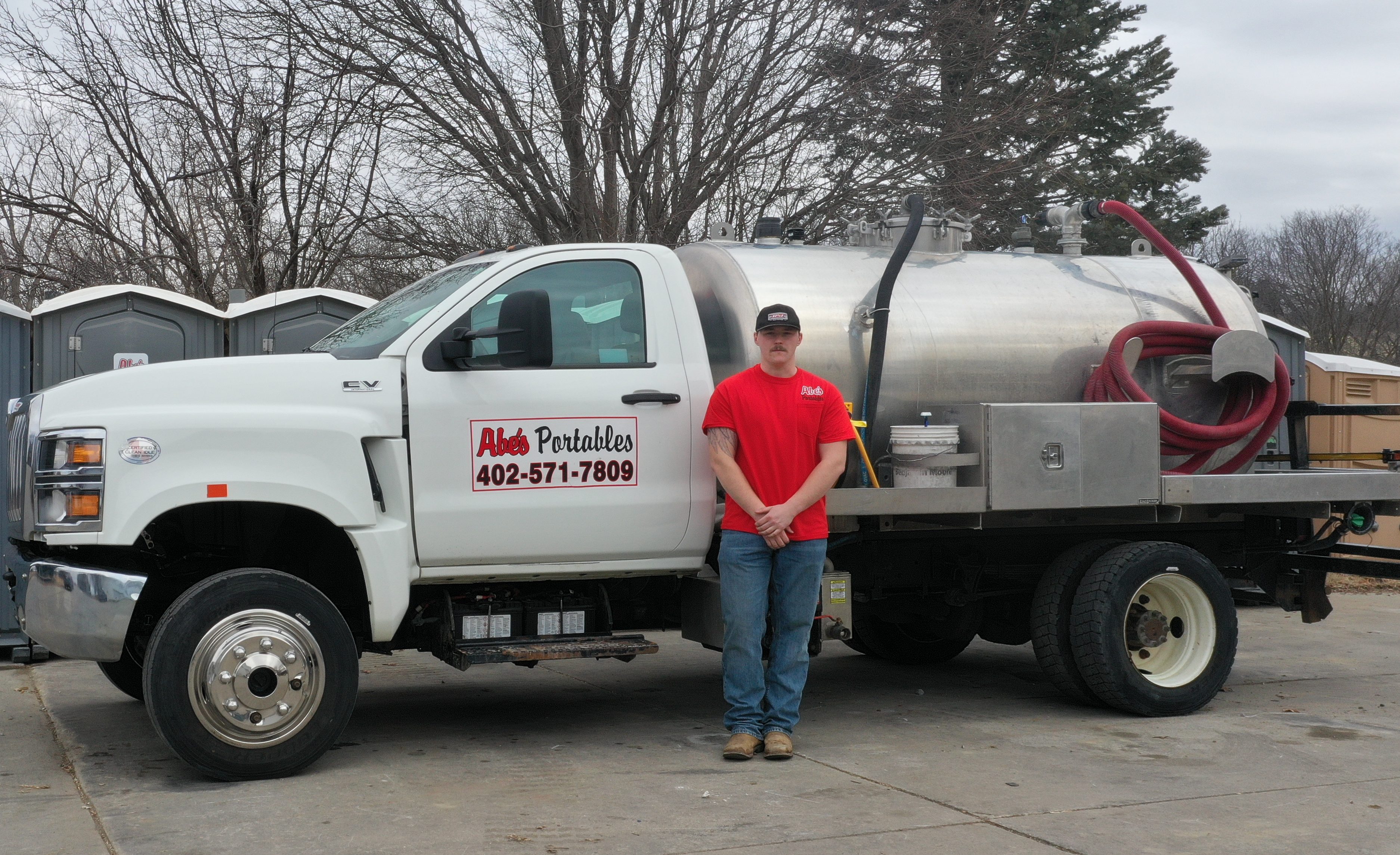
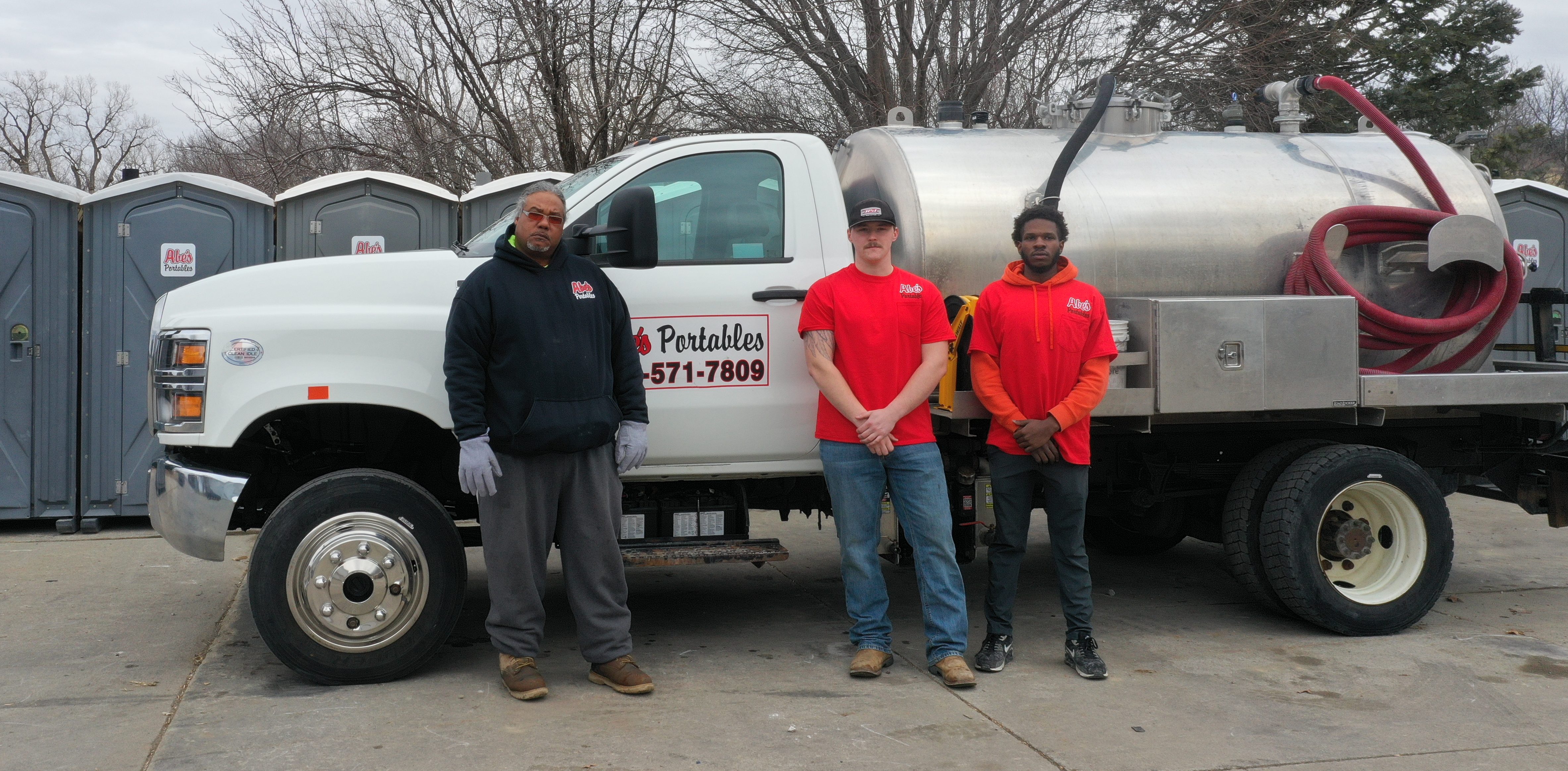
Every unit is pumped and restocked on a weekly schedule for the duration of the rental. The service crew arrives in a marked Abe's Portables truck, pumps the waste tank, refills hand sanitizer, replaces the deodorizer block, and wipes down the unit exterior. Service day and time are set at the start of the rental and stay consistent week to week, so the crew becomes a predictable part of the site schedule. If a unit is out of service for any reason between scheduled visits, call and we address it the same day. The weekly rate covers all standard service; extra pump-outs requested outside the schedule are billed as a separate service call.
Consistent service day every week for the life of the rental.
Adjust count as the project scales
Construction projects rarely hold a flat crew count from groundbreaking to final walkthrough. Framing and rough-in phases pull in larger crews than finish work. When your headcount increases, call to add units and the delivery goes on the next available truck, typically within 24 hours. When a phase wraps and the crew shrinks, call to remove units and billing adjusts from the start of the next billing cycle. There is no penalty for adjusting the unit count mid-project. Relocations within the same site are also available when the active work area moves to a different part of the property. We coordinate the relocation during a scheduled service visit whenever possible to avoid an extra trip charge.
Add, remove, or relocate units at any point with no penalty.
On the job site
Contractors who treat sanitation as an afterthought pay for it twice: once in citations, and again in lost work time.
OSHA violation fines for sanitation deficiencies on construction sites range from a few hundred dollars for first-time citations to several thousand for repeat or willful violations. Beyond the fine itself, a citation generates paperwork, a corrective action plan, a re-inspection, and in some cases a project hold. The cost in schedule disruption routinely exceeds the fine amount.
Workers who have to leave the site to find a restroom average eight to twelve minutes of lost time per trip, according to industry survey data. On a crew of twenty workers at two trips per shift, that is five to eight labor hours lost daily, before accounting for the time to return to the task and regain focus. Properly placed, well-maintained units on site reduce that number to under two minutes per trip.
General contractors who maintain clean, adequately stocked units also report fewer complaints during OSHA inspections generally. An inspector who sees a well-run site visually tends to approach the rest of the inspection with a different posture than one who walks onto a site with overflowing or missing units. It is one of the few compliance items that costs under $200 per month to maintain correctly.
We service the Omaha metro, Lincoln, Council Bluffs, and surrounding communities. Call to confirm availability for your project site before the start date.
FAQ
Questions From Site Supervisors
These are the questions project managers and GC field supervisors ask most before setting up a long-term site rental. If yours is not here, call and we answer it directly.
(402) 571-7809Request a Quote